

Lubing unlubed switches can turn a good switch into a great one: a very thin layer of grease takes the scratchiness out of the keystroke, the sound usually gets deeper, and a drop of oil on the spring gets rid of that metallic ping. What matters is the right lubricant, the right spots and, above all, the right amount. Here’s how to lube switches, what Krytox 205g0, 105 oil and switch films are for – and which mistakes to avoid.
Why lube switches?
Inside a switch, plastic parts slide against each other: the stem runs on its rails in guides in the housing, and the spring rubs against its seat. Unlubed, this can feel scratchy, and the spring can resonate and “ping”. Lube reduces that friction. Grease smooths out the scratchiness and dampens the sound, while oil on the spring removes spring ping without changing the sound much.

What lube can’t do: fix a wobbly housing or a loose stem. For housing wobble there are switch films (more on those below); a loose stem stays loose.
Do I need to lube my switches?
No – and with current switches we’d rather advise against it. Almost all switches in our shop are factory lubed and ready to use. Lubing them yourself is usually unnecessary and tends to make them worse: on HMX switches, for example, the housing tolerances are so good that just opening them tends to do more harm than good. These days it’s mainly unlubed Cherry switches that get lubed, filmed and new springs, such as our Cherry MX2A Black, a special production run without any lube. Our advice: buy current switches from our range, and only lube them yourself if you enjoy the hobby and the work, or want the most perfect result possible. Existing factory lube doesn’t have to be removed first unless it has gummed up or picked up dirt.
Switch lube: Krytox 205g0, 105 oil and more
The community standard are Krytox lubricants: PFPE (perfluoropolyether) oils and greases that are non-conductive and safe for plastics. GPL 10x are oils, GPL 20x are greases – the same oil thickened with PTFE powder, so GPL 205 is based on GPL 105. The higher the last digit, the thicker.
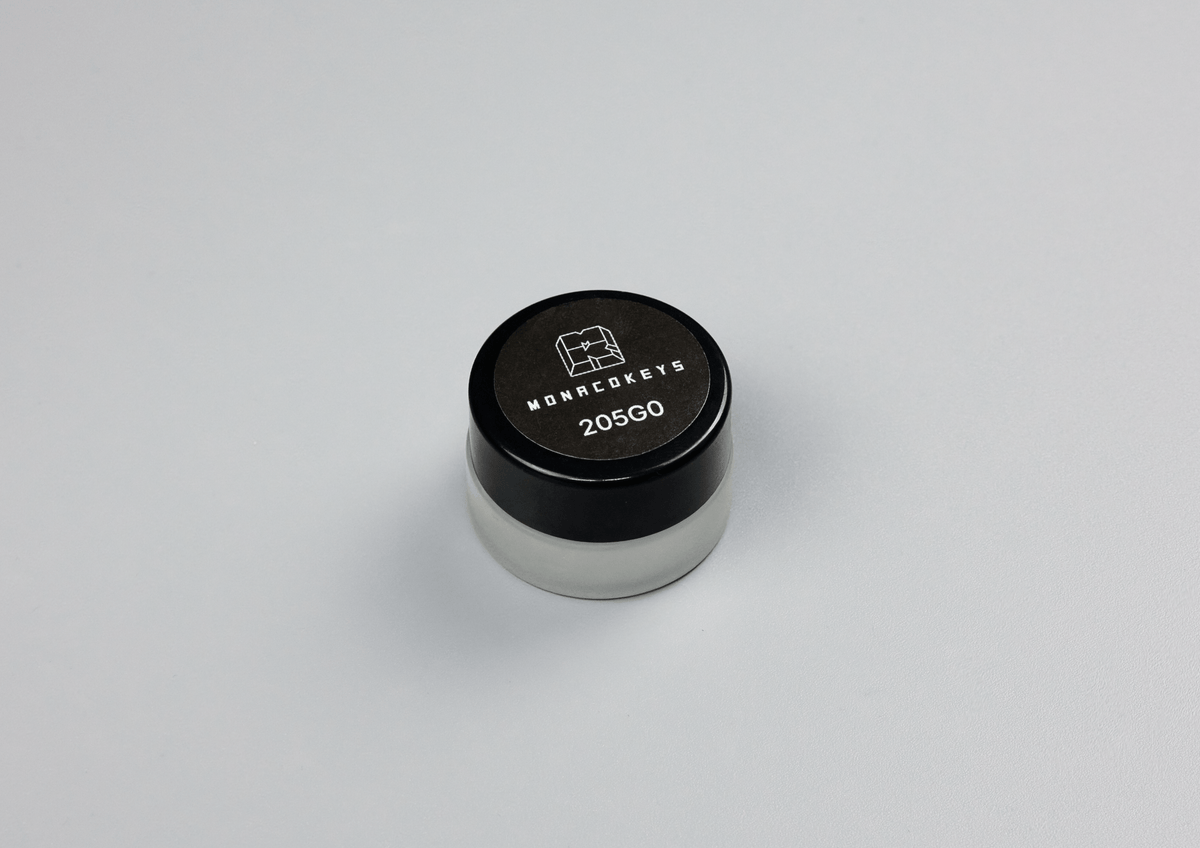
The g0 suffix is what matters: it stands for the soft Grade 0 consistency, roughly like mustard. Standard GPL 205 is Grade 2, closer to peanut butter – too thick for switches. If you buy “Krytox 205” without a grade, you’ll almost always get g2 and end up with sluggish switches. For switches, always go for 205g0.
| Lubricant | What it is | Use it for |
|---|---|---|
| Krytox 205g0 | soft grease (Grade 0) | the standard for linear switches: stem and housing rails; also for stabilizer housings |
| 205g0 + 105g0 mixed | a more fluid mix | tactile switches, very sparingly |
| Tribosys 3203 / 3204 | grease, thinner than 205g0 | an alternative for tactile switches (3203 thin, 3204 as an all-rounder) |
| GPL 105 (105g0) | oil, the base oil of 205 | springs (bag lube) against spring ping |
| GPL 205 Grade 2 | thick grease | not for switches – too thick |
Rule of thumb: thinner lube for tactile switches, slightly thicker for linears. In our shop you’ll find 205g0 as a 5 g jar and as a lube pen with a brush tip, plus MK 105g0 spring oil in a dropper bottle. Everything is in our lubricants collection.
Where to lube a switch – and where not
The graphic shows a disassembled MX switch with the key points:

- Stem rails: thin 205g0; on tactile switches only very sparingly or mixed with 105g0.
- Stem legs: thin on linears. On tactile switches not at all – lube on the legs dampens the bump.
- Bottom housing rails: thin 205g0, on tactile switches only very sparingly.
- Spring: brush on a thin layer of 205g0 or shake it with oil in a bag (see below).
- Top housing: usually not needed.
- Contacts (leaf): the contact area is off limits. Krytox is non-conductive – a layer right at the contact point can stop the key from actuating reliably. On tactile switches, keep the leaf dry – at most the back gets a touch of lube if the leaf itself pings.
A good guide for the amount: about one fingerprint’s worth per rail. If you see white streaks or clumps, it’s too much.
Clicky switches: hands off the click
Lube clicky switches only very sparingly and never on the click mechanism. On most models that’s the click jacket, a moving sleeve on the stem. If it gets grease on it, the click is gone. Reportedly, this is why Cherry leaves even the MX Blue without factory lube. How clickies work is explained in our guide to keyboard switch types.

Lubing springs: bag lube against spring ping
That metallic “ping” while typing happens when the spring resonates in the housing or rubs against its seat. The easiest fix is bag lube: put the springs into a zip bag with a little oil (105 or 106) and shake. About one drop per ten springs, or 0.1 to 0.15 ml per 100 springs, is enough. The goal is just to stop the ping, not to soak the spring.
Even easier: good springs. Our Kaidi KOS switch springs made of Korean stainless steel barely ping at all, even without lube – a real upgrade, especially for Cherry switches.
Still pinging? The spring isn’t always to blame: a rattling or pinging leaf sounds similar. In that case a touch of lube on the back of the leaf or a switch film helps.
Switch films: when they help
Switch films are thin spacers that go between the top and bottom housing. They fill the gap left by manufacturing tolerances or by opening the switch often. That stops the housing from wobbling as you type and gets rid of the leaf rattle this can cause. The sound usually becomes a little deeper and more focused – but the effect is smaller than that of lube.

The wobble test tells you whether your switches need films: hold the bottom housing and try to move the top housing. If it doesn’t move, films won’t do anything. Films are mostly only needed for older switches with poor tolerances. Current switches usually close tightly enough, and tight housings like HMX don’t need them. Our TX switch films are 0.15 mm thin and fit most MX switches; very tight housings need thinner films of around 0.125 mm. Films that are too thick stop the clips from snapping in properly.
Use tweezers to place the film on the open bottom housing so that both rails sit inside it. If it’s upside down, part of it sticks out and crunches when you press the key.
Tools for lubing switches
You’ll need a switch opener (Cherry style or Kailh style – the two aren’t interchangeable), a fine brush in size 0 or 00, a stem holder and tweezers. A lube station keeps the housings sorted, and for hot-swap boards you’ll also want a switch puller.
Most of this comes in the Keyboard Tool Collection (brushes, tweezers, switch puller, keycap puller, switch opener, stem holder). The TX Keyboard Multi Tool is a sturdier metal option with an opener for both designs. For full boards, the MonacoKeys Mini Lube Station holds up to 35 switches. More in our tools collection.
How to lube switches step by step
- Remove: pull the switches straight up from your hot-swap keyboard with a switch puller – no levering.
- Open: press the switch onto the opener and lift off the top housing; a lube station keeps the parts sorted.
- Brush: dip it into the grease and wipe it off until it looks almost dry.
- Bottom housing: a thin layer on the rails, contacts stay dry.
- Stem: lube the rails thinly in the stem holder; skip the legs on tactiles.
- Spring: bag lube it or brush on a thin layer of 205g0.
- Reassemble: stem legs facing the leaf, or the switch won’t register. Snap the top housing on and check all four clips.
- Test: do a few switches first and try them. You can always add more – removing excess is a chore.
Plan realistically: with some practice it takes one to three minutes per switch, including opening and closing. A 60% board with 61 switches will take you two to three hours, 70 to 100 switches an evening. A 5 g jar of 205g0 lasts for around 500 switches when applied thinly.
Common lubing mistakes
- Too much lube: the switch becomes sluggish and mushy, tactile switches lose their bump and the sound turns muffled. Fix: clean the stem and housing with isopropyl alcohol and relube thinly.
- Wrong grease: 205 without g0 is usually Grade 2 and too thick.
- Damaged clips: rare with the right opener.
- Films that are too thick: the housing doesn’t snap together properly or is under tension.
Two more things before you start: if you open and lube the switches of a prebuilt keyboard yourself, the manufacturer’s warranty is void. And opened or lubed switches count as used at MonacoKeys. So try new switches unlubed first before you lube a whole batch.
Which lube is right for me?
- You have linear switches: 205g0, thin on the stem and housing rails.
- You have tactile switches: 205g0 only very sparingly or mixed with 105g0 – skip the legs and keep the leaf dry.
- Your switches ping: 105 oil on the springs via bag lube – or go straight for better springs like the Kaidi KOS.
- You have clicky switches: best left as they are, or very sparingly – never on the click mechanism.
- The housing wobbles: switch films, not more lube.
FAQ: how to lube switches
Do I need to lube new switches?
No. Almost all switches at MonacoKeys are factory lubed, and lubing current switches yourself tends to make them worse. It makes sense mainly for unlubed switches like the Cherry MX2A Black – or if you enjoy the hobby and want the most perfect result.
Can I use 205g0 on tactile switches?
Yes, but really only very sparingly and never on the stem legs. Many people also mix 205g0 with 105g0 for a more fluid consistency. Thinner greases like Tribosys 3203 or 3204 are an alternative.
Do I need switch films?
Only if the top housing noticeably wobbles – usually on older switches with poor tolerances. Do the wobble test with a few switches from the bag – it can vary even within one batch.
Can I use XHT-BDZ on switches?
No. XHT-BDZ is a very thick grease meant only for the metal wires of stabilizers: it keeps the wires from touching the housings so they don’t clack. Use 205g0 for the plastic parts of the stabilizers.



 1557

 97