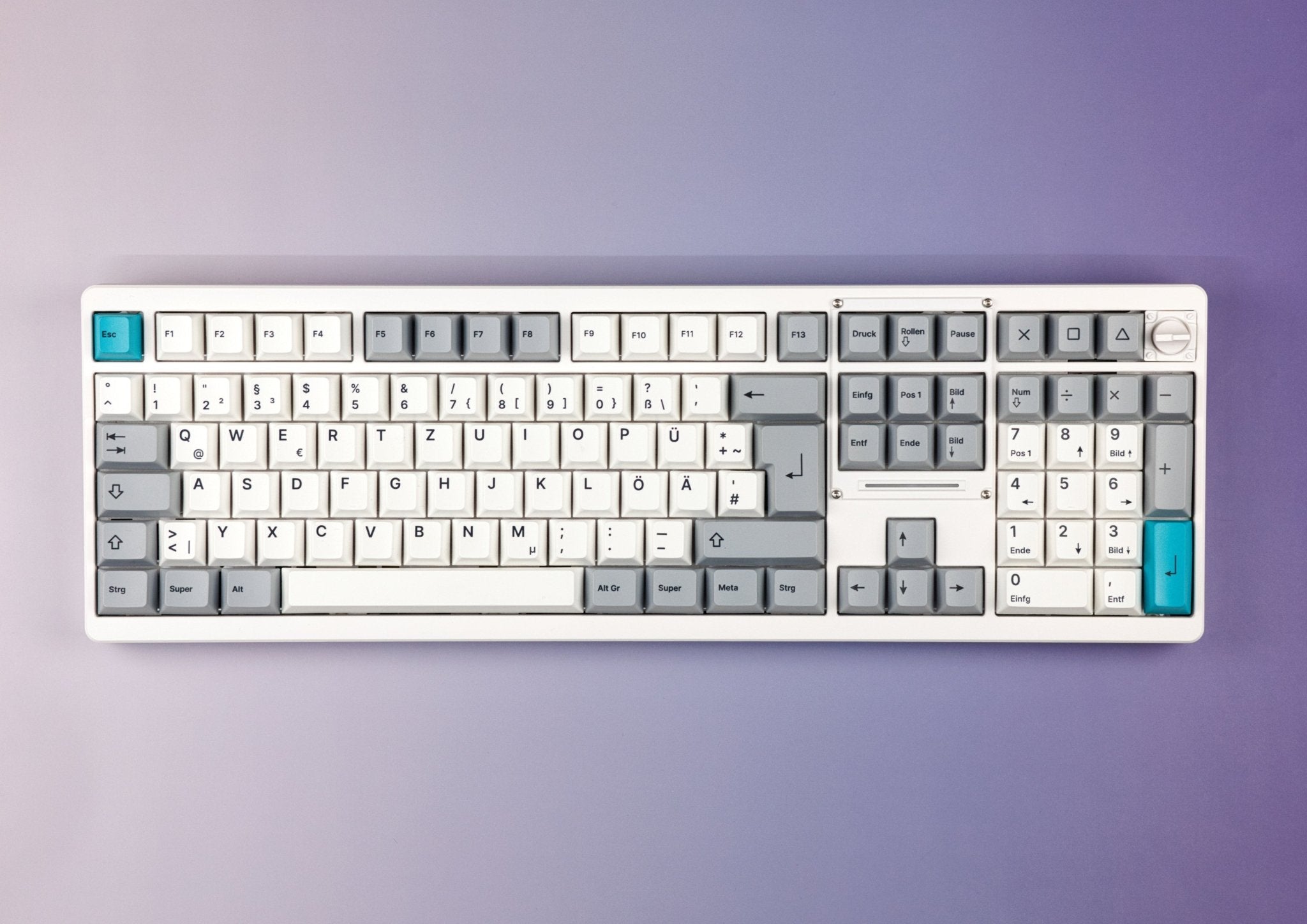
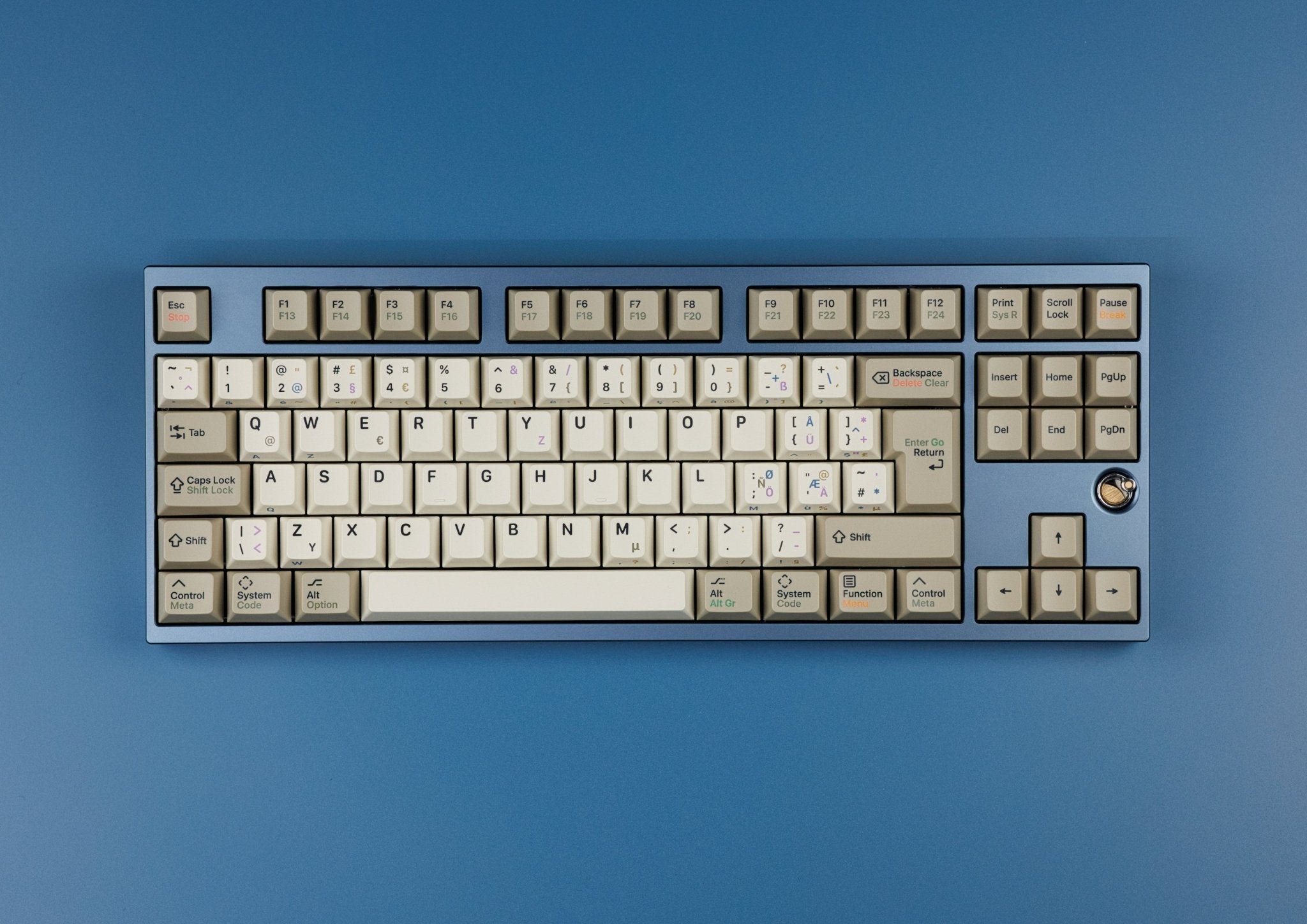
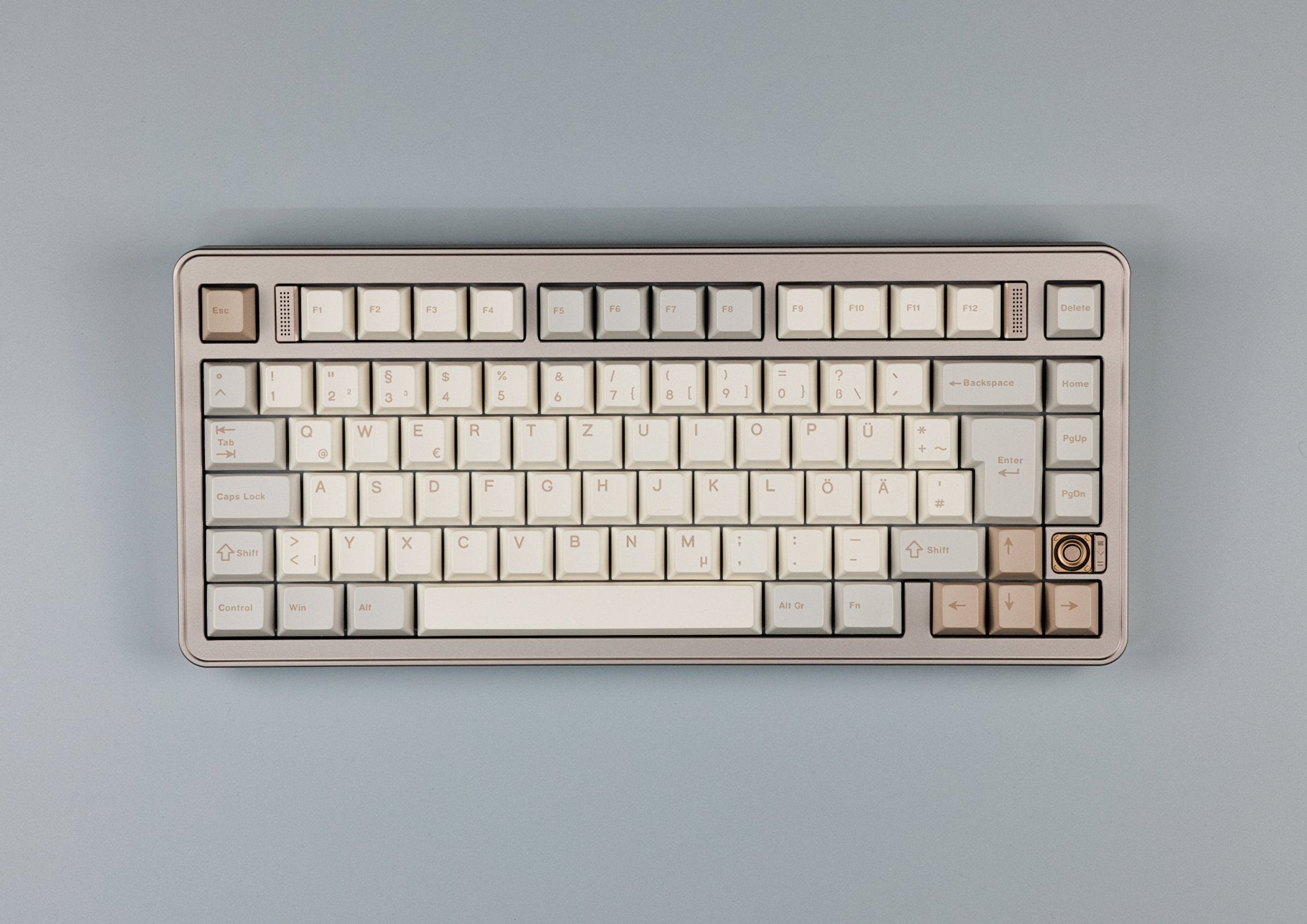

After switches, keycaps have the biggest influence on how a mechanical keyboard feels and sounds. Almost every set is made from one of two plastics: PBT or ABS. PBT shines more slowly, while ABS is more scratch-resistant and shows especially vivid colours. Whether a set feels smooth or rough, however, depends on the mould rather than the material. Just as important as the material is how the legends get onto the keys – from double-shot and dye-sub to simple printing. This guide compares PBT vs ABS keycaps, explains how the legend methods work and helps you find the right set.
ABS and PBT: the two keycap plastics
ABS stands for acrylonitrile butadiene styrene, PBT for polybutylene terephthalate. Both are proven materials for keycaps, and both can make excellent sets. The differences lie mainly in their sound, in how fast they develop shine and how scratch-resistant they are, and in which legend methods work well with them.
ABS keycaps: vibrant, scratch-resistant, made for double-shot
ABS is inexpensive to produce and has been the standard material for keyboard cases and keycaps for decades. It is fairly scratch-resistant and is especially good at showing bright, intense colours and a deep black. Over time, the keys you use most become smoother and glossier – the community calls this shine. ABS usually develops it faster than PBT. It’s normal wear, not a defect, and happens on high-end sets too. Double-shot legends aren’t affected by it.
Solvents such as acetone attack ABS – keep them away from your keycaps.

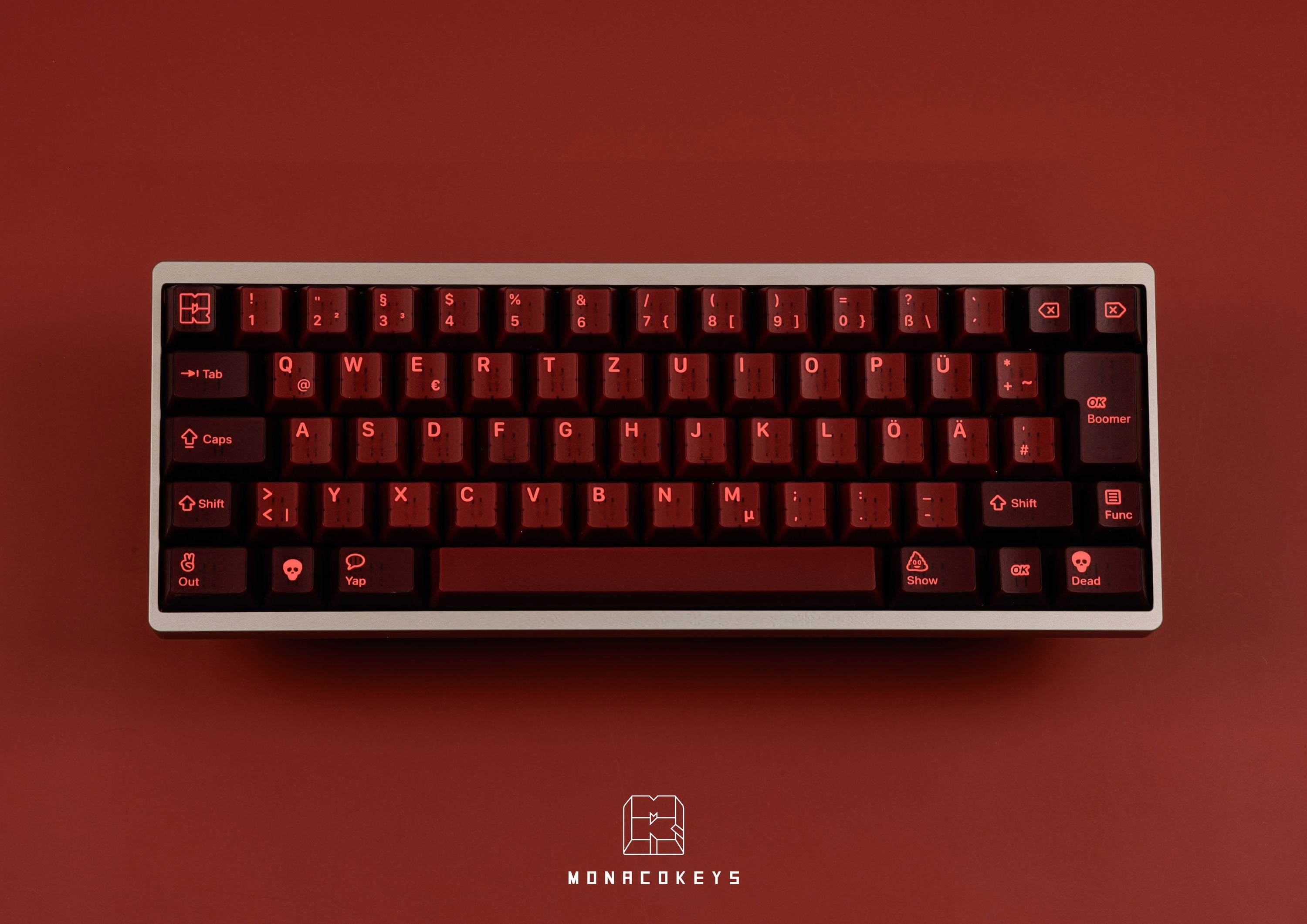
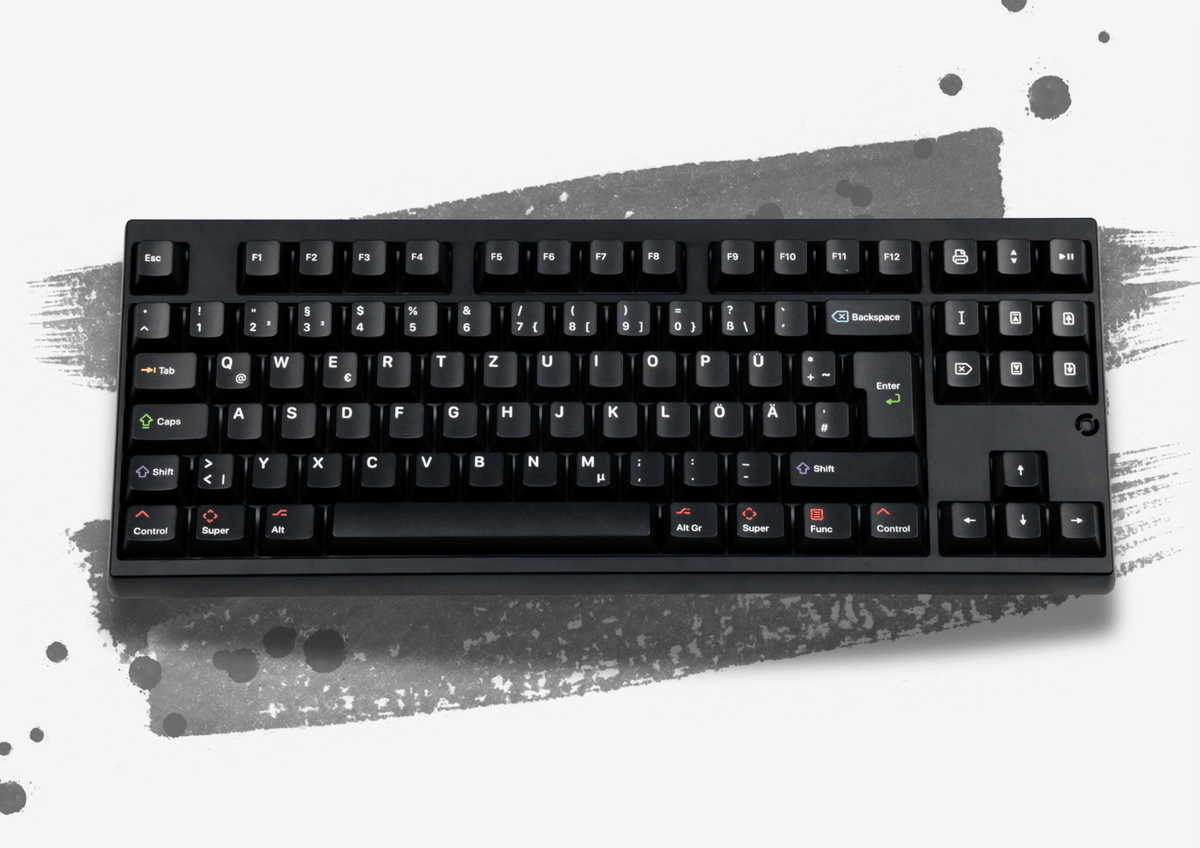
ABS plays to its strengths in manufacturing: it shrinks very little as it cools in the mould. That’s why it’s the preferred plastic for double-shot keycaps and works well for long keys like the space bar. At MonacoKeys, all ABS sets are either double-shot or UV-printed – for example the double-shot ABS KKB Dolch. The MK White on Black is deliberately made from ABS because ABS gives a deeper black than PBT.
Why ABS is so popular in the custom keyboard scene
ABS is widespread in the custom scene, above all because of its sound: ABS has a warmer sound profile than PBT, and many customers prefer exactly that. In Germany, PBT is very popular with most customers – but the deeper you get into the custom keyboard world, the more popular ABS becomes. Worldwide, ABS keycaps are clearly in higher demand than PBT keycaps.
Shine is also less dramatic than its reputation. ABS doesn’t shine “straight away”: some people see the first traces after a few weeks, others use a set for a year or longer before anything shows – it’s very individual. And shine isn’t necessarily bad: it gives a set character and shows that it’s being used.
It’s important to understand the difference to cheap keycaps: the shine on high-quality ABS sets can’t be compared with what you know from typical ABS keys on pre-built keyboards from big brands. There, keys often shine very quickly, legends wear and paint comes off. None of that applies to the ABS sets in our shop – we only work with makers who use high-quality ABS and do injection moulding at the highest level.
PBT keycaps: slower shine, tough and heat-resistant
PBT is considered one of the hardest and most durable keycap materials. It usually develops shine more slowly than ABS – how fast also depends on the surface texture. In return it scratches more easily, for example with a tool or a fingernail. It is also more resistant to heat and chemicals than ABS.
That heat resistance is exactly why PBT is the standard material for dye-sub legends (more on that below). Manufacturing is trickier, though: PBT shrinks more as it cools and can warp, which makes large keys like the space bar harder to produce. Double-shot PBT exists too. In our range you’ll find it in all KAP keycap sets and in PBTfans WoB, BoW and Maguro.
Smooth or rough? The mould decides
PBT and ABS can both be smooth or rough. Whether a keycap feels grippy or smooth doesn’t depend on the plastic but on the injection mould and the surface texture the maker chose for it. Under a microscope, every keycap surface consists of lots of tiny “peaks”: the closer together they are, the smoother the key feels; with more space between them, you feel the texture more. The only difference down to the material: ABS usually gets smooth faster with use than PBT.
Because the mould decides, the feel differs mainly between brands. In our range, from grippy to smooth: PBTFans double-shot, SWG, MK dye-sub and KCH v2, MW, KCH v1, PBTFans dye-sub and KAP. You’ll also find this on the product pages under “Good to know”.
Do PBT keycaps sound deeper than ABS?
Not necessarily. In our experience ABS has a warmer sound profile than PBT – one reason why ABS is so popular in the custom scene. Descriptions in the community vary, though, and there are no measurements to settle it. Wall thickness, switches, case and dampening matter at least as much as the plastic. Across our range, wall thickness is roughly 1.3 to 1.7 mm, and you’ll find it in the specifications of every set.
To learn how switches and build shape the sound, read our guides on keyboard switch types and gasket mount and keyboard sound.
Legends: how the lettering gets onto the keycap
The legend is the lettering on a key. The method decides whether it wears off, how sharp it looks and which colour combinations are possible. The key question: is the legend in the plastic or just on it?

Double-shot keycaps
Double-shot keycaps are made by injecting two plastics of different colours into the mould, one after the other: one for the legend, one for the outer colour layer of the key. Colours are cleanly separated, and the legends stay crisp and readable even after years of use. Double-shot is the process with the most vivid colours. It sits flush with the surface and has strong contrast – light legends on dark caps are no problem. You can spot double-shot keycaps from underneath: both colours are visible inside, and depending on the mould you may also see openings or the outline of the legend. That’s a normal result of the process.
What that costs depends on volume and on the mould. In small runs, double-shot is the most expensive method; in large volumes it can even be cheaper than dye-sub. Budget manufacturers mould a whole set in one mould and one shot, which is why their sets usually share the same selection of keys. Premium manufacturers have a separate mould for every key and put sets together individually. That brings quality and variety, but also a higher price. Because every extra key needs its own mould, novelties and extra keys often come in separate kits, or are printed instead. Add a third plastic and double-shot becomes triple-shot, used for example for multi-coloured sub-legends on KKB Cross Impact.
Dye-sub (dye sublimation)
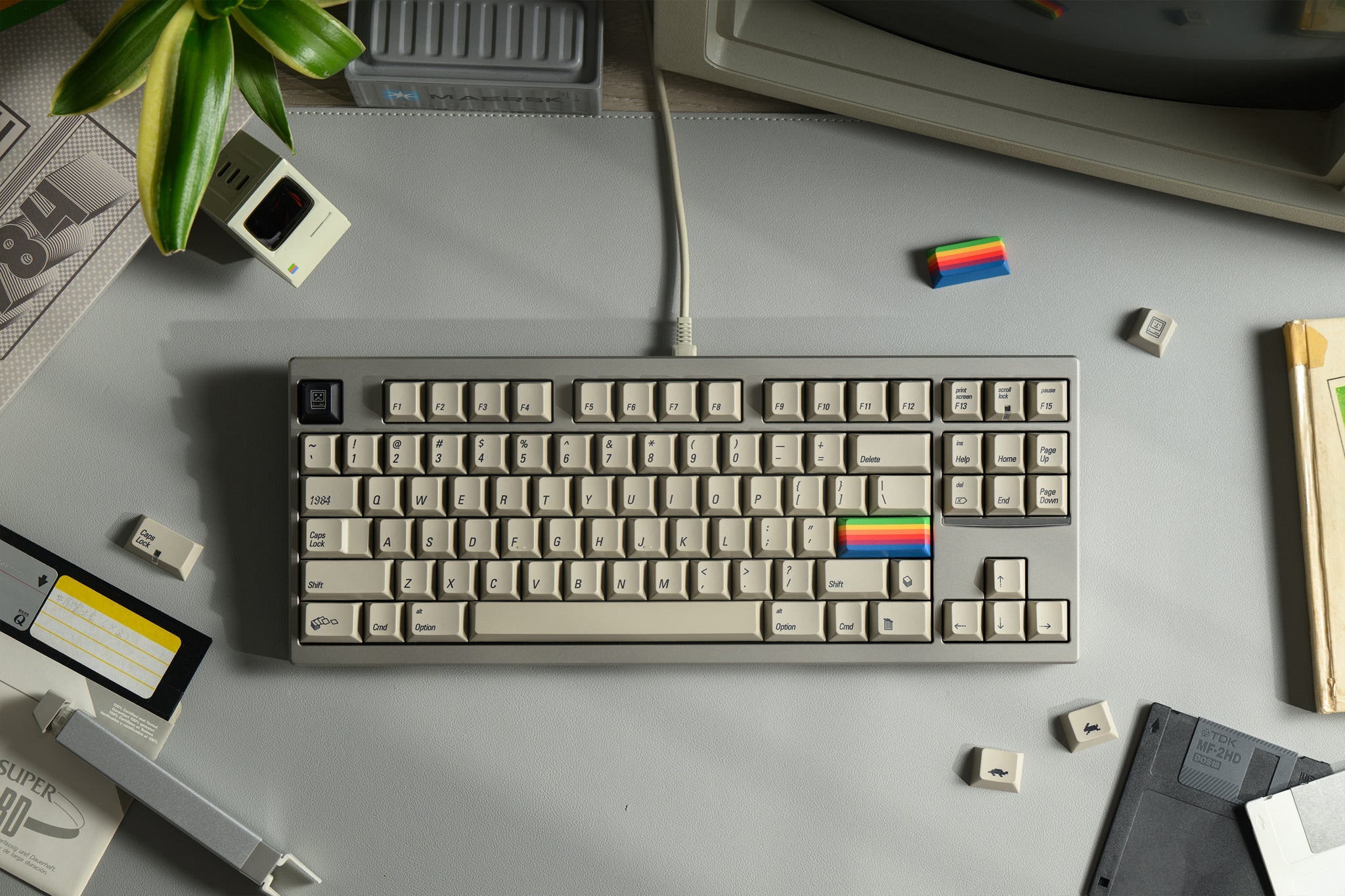
With dye sublimation, heat drives the dye into the plastic. The legend becomes part of the material and doesn’t rub off. Multi-coloured legends and detailed artwork are easy to do. Since the base cap is always light and dyed afterwards, colours are usually not quite as intense as with double-shot. Because the process needs high temperatures, it’s used on PBT – other plastics would soften. There is one limitation: the dye has to be darker than the cap. Dark legends on light caps, as on our MK Black on White, work – light legends on dark caps don’t. Harsh chemicals such as acids can attack dye-sub legends.
For light legends on dark PBT there is reverse dye-sub: everything except the legend gets dyed (also called “5-side print”), for example on the PBS WoB. Large colour gradients on the side walls mostly appear with cheap manufacturers. Keyreative, PBTFans and MW have optimised both the process and the moulds for the blank caps so the dye adheres better, and gradients are barely noticeable today. With dye-sub, a legend may sit minimally differently from its neighbour – that’s inherent to the process. Since almost the whole key gets dyed, reverse dye-sub uses more dye and has more rejects, so it costs more than regular dye-sub.
UV printing
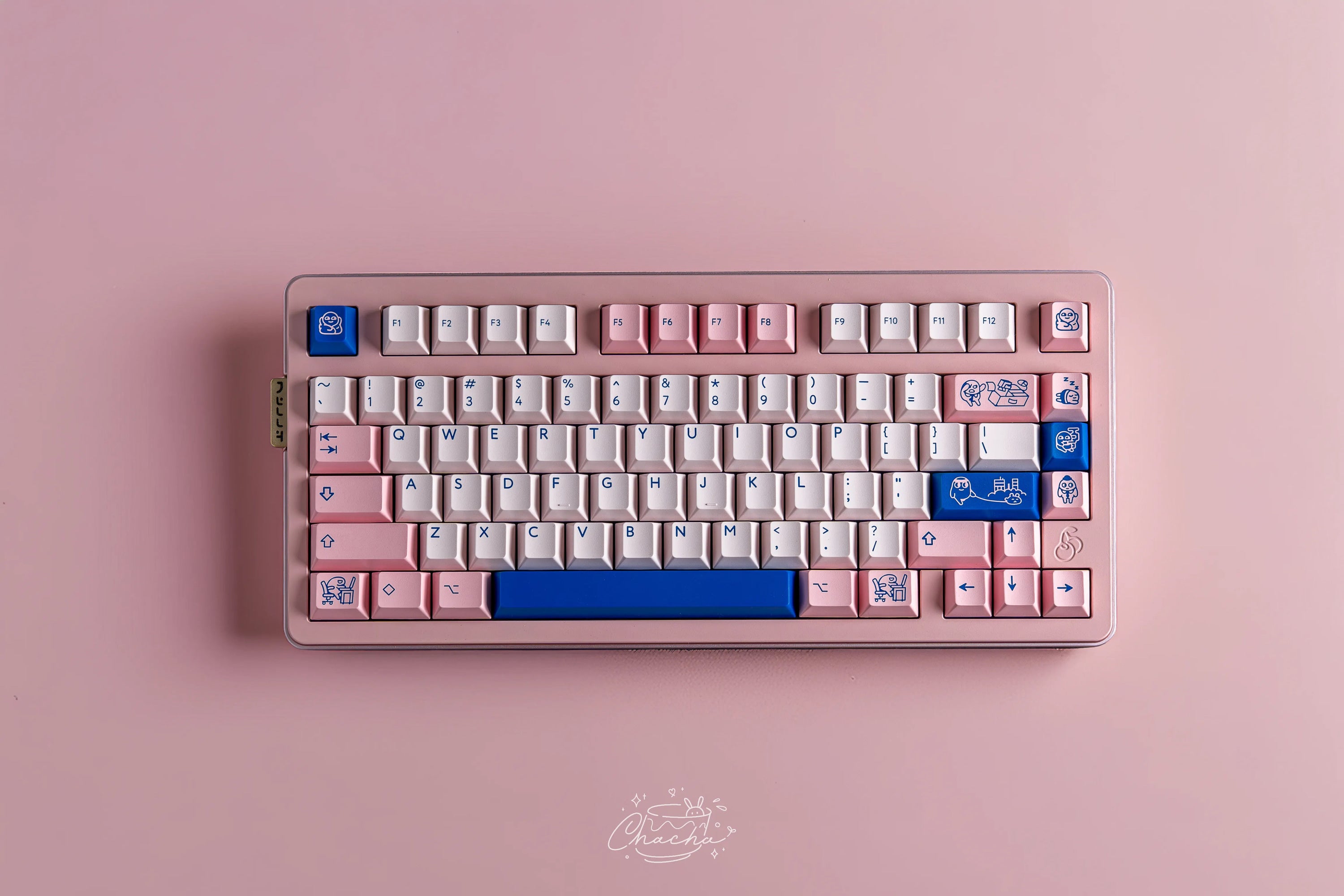
With UV printing, the legend is printed as a layer on top of the cap, cured with ultraviolet light and protected by a hard coat. This allows full-colour artwork, light colours on a dark base and even prints on transparent ABS, as on the PBTfans G3. Because the legend sits on the surface, it can come off over time.
Laser and pad printing
You probably know these two from mass-market keyboards. With pad printing, a rubber pad transfers ink onto the key. It’s the cheapest and most common method on off-the-shelf keyboards – and the reason old keyboards have worn-off letters, because the ink doesn’t penetrate the plastic. Laser marking chars, foams or engraves the plastic, with the engraved groove filled with paint. None of our keycap sets use laser or pad printing.
PBT vs ABS keycaps at a glance
| ABS | PBT | |
|---|---|---|
| Surface | smooth to rough – depends on the mould, not the material | |
| Shine from use | usually faster | usually slower |
| Scratches (tools, fingernails) | fairly scratch-resistant | more sensitive |
| Colours | especially vivid, deep black | usually less intense with dye-sub |
| Heat and chemicals | less resistant | more resistant |
| Manufacturing | low shrinkage, ideal for double-shot and long keys | shrinks more, can warp |
| Typical legends | double-shot, UV print | dye-sub, less often double-shot |
| Sound | warmer – preferred by many customers | depends on set and wall thickness |
| Legend | How it works | Wear | At MonacoKeys |
|---|---|---|---|
| Double-shot | two plastics moulded one after the other | none | most ABS sets; in PBT: KAP and PBTfans WoB, BoW, Maguro |
| Dye-sub | dye driven into the plastic with heat | practically none | most PBT sets |
| UV print | ink printed on, cured with UV light | can wear off | selected sets and novelties |
| Laser | plastic charred, foamed or engraved | depends on the variant | not in our sets |
| Pad print | ink applied with a rubber pad | wears off | not in our sets |
Which keycaps are right for me?
- You like a grippy, noticeably textured surface: that’s down to the brand, not the material – for example PBTFans double-shot or SWG.
- Your keys should stay shine-free as long as possible: PBT.
- You want bold colours and high-contrast legends, including light on dark: double-shot – classically in ABS, like the KKB Dolch.
- You want double-shot and slow shine: double-shot PBT such as KAP WoB.
- You’re after lots of colours and artwork on the keys: dye-sub on PBT or UV print.
- You like it smooth: for example KAP. With ABS, shine simply comes with time.
Besides the material, the profile – the shape and height of the keys – decides how a set types. Find out more in our guide to keycap profiles. Browse all sets under keycaps, or sets with German legends under keycaps with QWERTZ layout (ISO-DE).
FAQ: PBT vs ABS keycaps
Is PBT better than ABS?
Not across the board. PBT shines more slowly and handles heat better, but scratches more easily. ABS is more scratch-resistant, shows more vivid colours, is ideal for double-shot legends and barely warps on long keys – but it shines faster. Both make high-quality keycaps as long as wall thickness and manufacturing are right.
Do double-shot legends wear off?
No. The legend is a separate plastic that runs through the entire wall of the key. Dye-sub legends are also part of the material and practically don’t wear. Printed legends, on the other hand, can wear off over time.
Is double-shot more expensive than dye-sub?
Not necessarily. Of the methods used in our sets, UV printing is usually the simplest and cheapest. Dye-sub is very expensive in small quantities and gets cheaper quickly with volume; reverse dye-sub costs more because of all the dye it needs. Double-shot is the most expensive in small runs but can be cheaper in large volumes. The moulds drive the price most: a separate mould for every key allows individual sets and high quality, but costs more.
Is PBT rougher than ABS?
No, not automatically. Both plastics can be smooth or rough – that’s down to the mould and its surface texture. That’s why sets from different brands feel different even when they’re made of the same material.
Why are my ABS keycaps getting shiny?
Typing gradually makes the surface of your most-used keys smooth and glossy. ABS usually develops this shine faster than PBT – when is very individual: for some after a few weeks, for others after a year or later. It’s normal wear, not a defect, and gives the set character. It has nothing to do with the quick shine and worn legends of cheap pre-built keyboards. If you want to avoid shine for as long as possible, go for PBT with a noticeable texture.
Do the legends light up with RGB lighting?
Not on our sets. Neither dye-sub PBT nor our double-shot sets are shine-through, and that includes the PBTfans sets with a transparent top. The light shines between the keys instead.



 1557
 97